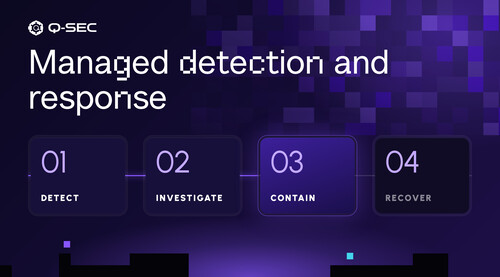
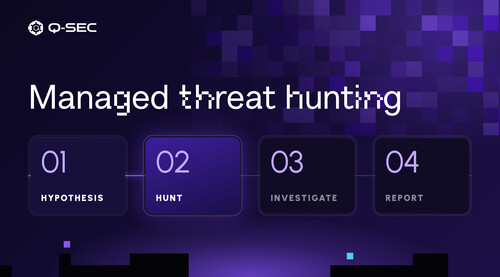
What Is Managed Threat Hunting? How It Works Inside MDR
Threat hunting solutions fall into three practical models: platforms used by your own analysts, managed threat hunting delivered by an external team, and threat hunting included in a broader managed detection and response (MDR) service.
The technology underneath them often overlaps. An internal SOC and an MDR provider may both hunt through SIEM, endpoint, identity, cloud, network, and threat intelligence data. The difference is who develops the hunt, follows the evidence, documents the result, and owns the next action.
That is why a threat hunting tools comparison should not begin with feature count. A powerful platform still needs usable telemetry and people who know how to investigate with it. A managed service adds analyst capacity. MDR-included hunting connects that work to continuous monitoring, incident investigation, and an agreed response model.
For buyers, the first decision is simple: determine whether the missing capability is better hunting technology, people to perform the work, or an operating service that connects hunting with response.
Free guide
Compare hunting scope before you compare MDR price
The MDR Pricing in Europe guide breaks down threat hunting scope, investigation depth, response ownership, pricing models, and the service limits that can sit behind similar proposals.
Get the MDR Pricing in Europe guideWhat types of threat hunting solutions are available?
A threat hunting solution can provide technology, analyst expertise, or both. Separating those models first prevents an awkward comparison between a software license and a team of people.
| Model | What you buy | Who hunts | Typical fit |
| Threat hunting platform / software | Search, analytics, telemetry, enrichment, investigation, and automation capabilities | Internal analysts | Teams with hunting skills, usable data, and time to investigate |
| Managed threat hunting service | External analyst time and a defined hunting service around agreed data | Provider hunters | Teams with telemetry but limited specialist hunting capacity |
| MDR-included hunting | Hunting inside continuous detection, investigation, escalation, and agreed response | MDR analysts | Teams that need hunting connected to a wider security operation |
The categories can overlap. A provider may hunt in the customer's existing SIEM. An internal SOC can use a platform for routine hunting and bring in specialists for a narrow campaign or incident. The useful distinction is operational ownership, not the logo on the screen.
Which threat hunting tools and platforms are worth comparing?
The products below are not interchangeable. Some are SIEM-led, some are XDR-led, and some combine security operations functions across a wider platform. They belong in the same buyer conversation because each gives analysts a documented way to search security telemetry, investigate entities or events, and turn useful findings into detection or response work.
| Platform | Hunting surface | Useful documented strengths | Watch before buying |
| Microsoft Sentinel + Defender XDR | KQL and guided hunting across Sentinel and Microsoft Defender data | Hunts, advanced hunting, bookmarks, entity pivots, incidents, custom detections, query reuse | Data availability and retention differ by source; advanced workflows still need analyst skill |
| Splunk Enterprise Security | Search and investigation across security and IT data | SPL search, threat hunting use cases, UEBA, threat intelligence, detections, case and response workflows | Value depends heavily on data onboarding, normalization, content, and analyst capability |
| Google Security Operations | UDM Search and YARA-L across normalized telemetry | Large-scale search, curated/custom detections, threat intelligence, SIEM/SOAR workflow, natural-language assistance | Requires teams to understand UDM, detection logic, data quality, and Google SecOps operating model |
| Palo Alto Networks Cortex XDR | XQL / Query Builder across endpoint and connected XDR data | Query-driven hunting, causality and timeline views, response actions, BIOC/correlation-rule follow-up | Some capabilities and managed hunting require specific licenses/add-ons; check exact scope |
| CrowdStrike Falcon Next-Gen SIEM | CrowdStrike Query Language across native and third-party data | Fast search, endpoint/identity/cloud context, detections, threat intelligence, automation ecosystem | Do not confuse platform hunting with Adversary OverWatch, which is a separate managed hunting service |
| WithSecure Elements EDR | Event Search for Threat Hunting across raw endpoint event data | Optional threat-hunting event search, rich endpoint telemetry, investigation views, response actions, expert escalation options | Endpoint-focused; confirm optional component, retention, service add-ons, and whether broader cross-domain data must live elsewhere |
| HarfangLab EDR | Endpoint telemetry, dynamic filtering, investigation jobs, YARA/Sigma/IOC rules | Cloud or on-premises deployment with feature parity, transparent rules, endpoint investigation/remediation, Kio-assisted analysis | Primarily endpoint-led; buyers needing broad SIEM-style cross-domain hunting will need integrations or another data layer |
| TEHTRIS XDR AI Platform | Unified XDR console across EDR, SIEM, NTA, CTI and other modules | Integrated investigation views, raw data, threat intelligence, SOAR, automated response, optional MDR with proactive hunting | Broad modular platform; verify exact modules, deployment model, data location, and managed-service scope in the proposal |
Microsoft Sentinel and Defender XDR
Microsoft now offers two closely connected hunting experiences in the Defender portal. Microsoft Sentinel Hunts supports hypothesis-led work with hunting queries, bookmarks, entities, comments, incidents, and follow-up actions. Defender XDR Advanced Hunting provides guided and KQL-based querying across Defender data and, when Sentinel is connected, Sentinel data as well.
Microsoft documents that Advanced Hunting can query data from Defender for Endpoint, Office 365, Cloud Apps, Identity, and Sentinel, while Sentinel Hunts can turn hunt findings into analytic rules, incidents, threat intelligence, and playbooks. Microsoft Sentinel Hunts and Defender XDR Advanced Hunting are the relevant product references.
Best fit: organizations already invested in Microsoft security that want analysts to hunt across Microsoft telemetry and Sentinel data without adding another primary hunting interface. Check retention, permissions, connected data, and whether the team is comfortable with KQL or will rely on guided hunting.
Splunk Enterprise Security
Splunk Enterprise Security approaches hunting from a broad data and security-operations base. Splunk documents threat hunting through flexible searches, behavioral baselines, threat intelligence, UEBA, detections, investigation, and response workflows.
Its current Enterprise Security documentation lists threat hunting as a use case and describes findings/searches for identifying malicious activity, with Premier adding UEBA-driven behavioral insight and automated runbooks. See Splunk Enterprise Security threat hunting use cases.
Best fit: teams that already centralize broad security or operational data in Splunk and have analysts who can turn that data into repeatable searches and investigations. The buying question is less whether Splunk can search and more whether the right data, content, and analyst time are already there.
Google Security Operations
Google Security Operations gives analysts UDM Search for normalized events and alerts, YARA-L for detection logic, and a wider SIEM/SOAR environment for investigation and response. Google also documents natural-language assistance through Gemini for searching data and creating detections.
The current Google SecOps platform documentation separates SIEM search from SOAR case/entity search, while UDM Search documentation explains how analysts search normalized events and alerts.
Best fit: teams that want cloud-scale search across normalized security telemetry and are prepared to work within Google's UDM and YARA-L model. As with every platform here, AI assistance can shorten query work; it does not decide whether the evidence proves the hypothesis.
Palo Alto Networks Cortex XDR
Cortex XDR supports query-driven investigation with Cortex Query Language (XQL), Query Builder, causality views, timelines, and response actions. Palo Alto's documentation shows analysts using threat intelligence to build a query, refining results, following the execution chain, and creating a behavioral indicator of compromise (BIOC) or correlation rule when the behavior can become standing detection.
See Palo Alto Networks' Cortex XDR known-threat research workflow.
Cortex also has a separately licensed Managed Threat Hunting service. That distinction matters: Cortex XDR is the platform; Managed Threat Hunting adds Palo Alto Networks analysts. Buyers should compare the license and service boundary rather than assuming the software subscription includes external hunters.
CrowdStrike Falcon Next-Gen SIEM and Adversary OverWatch
CrowdStrike is another useful example of why product and service models need separate columns. Falcon Next-Gen SIEM provides search across native and third-party data, CrowdStrike Query Language, detections, threat intelligence, and security-operations workflows. Falcon Adversary OverWatch is CrowdStrike's managed threat hunting service.
CrowdStrike describes Falcon Next-Gen SIEM threat detection and search separately from Falcon Adversary OverWatch, which provides 24/7 managed hunting across Falcon and available third-party data.
Best fit depends on what the organization is actually missing. A capable internal team may need the platform. A team that wants CrowdStrike specialists performing the hunt is buying a different service.
WithSecure Elements EDR
Finland-based WithSecure is useful to include because its Elements EDR documents an optional Event Search for Threat Hunting capability that exposes raw endpoint event data for proactive searches. Its EDR also provides process and event investigation, host isolation, advanced response actions, and an escalation route to WithSecure experts.
Best fit: European organizations that want endpoint-led hunting and investigation with a vendor that offers both self-operated and expert-assisted paths. The important boundary is scope: this is primarily endpoint telemetry, so buyers needing broad identity, cloud, network, and application hunting should check which integrations or additional platforms will carry that data.
HarfangLab EDR
France-based HarfangLab takes a transparent, endpoint-focused approach. Its EDR exposes telemetry and detection logic, supports YARA and Sigma rules, dynamic filtering, investigation jobs, remote actions, and cloud or on-premises deployment with the same stated functionality. Its Kio assistant can help analysts investigate security events through natural-language queries.
Best fit: teams that value endpoint data control, open detection formats, on-premises deployment options, and direct analyst access to rules and telemetry. It should not be presented as a replacement for a cross-domain SIEM when the hunt needs identity, SaaS, network, or application evidence outside the endpoint layer.
TEHTRIS XDR AI Platform
France-based TEHTRIS belongs in the broader-platform group. Its XDR combines modules including EDR, SIEM, network traffic analysis, threat intelligence, SOAR, and deception in one console. Current product material describes investigation views, raw-data access for forensic work, contextualization, playbooks, and automated response. TEHTRIS also offers MDR with proactive threat hunting.
Best fit: European buyers looking for a modular XDR stack with platform and managed-service options from the same vendor. Compare the exact modules in scope, hosting or on-premises requirements, data location, and the split between automated actions and analyst-led hunting rather than relying on the XDR label alone.
When does buying a threat hunting platform make sense?
A threat hunting platform makes sense when the organization can already supply the human and operating pieces around it. Before adding another tool, check whether your team can do the following reliably:
- Turn threat intelligence, weak signals, attack techniques, and business risks into testable hunt questions;
- Confirm that the required endpoint, identity, network, cloud, email, or application evidence is actually available;
- Write or adapt searches and understand the product's query model;
- Follow suspicious results across entities and test benign explanations;
- Preserve evidence and document why a hypothesis was supported, rejected, or left unresolved;
- Escalate confirmed activity into an incident and take action under a defined response process;
- Turn repeatable hunt findings into detections and maintain them after deployment.
Capacity belongs on the same checklist. A SOC can own excellent hunting software and still perform very little proactive hunting when every analyst hour is consumed by alert queues and incident work. In that case, buying another interface treats the visible symptom rather than the operating constraint.
What does a managed threat hunting service add?
A managed threat hunting service adds people and a delivery method around the technology. The provider can develop hypotheses, run searches, follow pivots, document findings, and escalate suspicious activity within the agreed scope.
That does not remove the customer's role. External hunters still need access to the right telemetry and enough business context to distinguish expected administration from suspicious behavior. The contract also needs to say what happens after a finding. Some hunting services stop at a report. Others investigate further or hand the case into another response service.
See the managed hunt itself, not another product list
Managed Threat Hunting Inside MDR explains the hypothesis, telemetry, analyst pivots, bounded outcomes, evidence, and handoff into incident response.
How is MDR-included threat hunting different?
MDR-included hunting places proactive searches inside a wider detection and response operation. The same team or service can connect a hunt finding to continuous monitoring, incident investigation, case management, customer escalation, detection engineering, and response authority.
That can reduce handoffs, but the MDR label alone proves very little. Buyers still need to ask how often hunts occur, whether they are customer-specific, which telemetry is searchable, what a completed hunt contains, and which actions the provider can take after confirming malicious activity.
Q-Sec's current Advanced Detection & Response service states that it integrates EDR, SIEM, cloud, and identity telemetry, runs targeted hunts daily, and can execute or guide containment actions such as isolating devices or disabling compromised accounts within agreed scope.
This model is most relevant when the missing capability is broader than hunting alone. If monitoring, investigation, escalation, and response are also fragmented or understaffed, an MDR-included model addresses more of the operating chain.
Threat hunting platform vs. managed service vs. MDR: side-by-side
Use this comparison after you have checked the existing security stack. It shows who owns the work around the technology, which is usually where similar-looking offers separate.
| Evaluation area | Platform / software | Managed hunting service | MDR-included hunting |
| Primary purchase | Technology | External hunting expertise | Integrated detection, hunting, investigation, and response service |
| Analyst capacity | Customer | Provider | MDR provider |
| Telemetry | Customer connects and maintains | Agreed customer/provider sources | Connected sources within MDR scope |
| Hypothesis ownership | Internal team | Provider, often with customer input | MDR team using customer context and operational findings |
| Search/query work | Internal | Provider | MDR analysts |
| Continuous monitoring | Separate capability | Usually separate unless stated | Core service function |
| Incident investigation | Internal | Varies by contract | Normally connected to MDR workflow |
| Containment / response | Internal or separate service | Often outside pure hunting scope | Defined by MDR response authority |
| Detection engineering | Internal | May be included | Can feed directly into MDR detection content |
| Best fit | Mature internal SOC needing better hunting technology | Team with data but limited hunting capacity | Team needing hunting tied to wider security operations |
How should you evaluate threat hunting solutions?
Evaluate threat hunting solutions by checking telemetry coverage and retention, analyst requirements, investigation depth, response handoff, and whether hunt findings can improve permanent detection.
Start with telemetry, not the demo
Ask which data sources can actually be searched and how much history is available. Endpoint hunting cannot answer every identity or SaaS question. A 60-day hypothesis cannot be tested against an event retained for 14 days. Product search speed is irrelevant when the evidence never arrived.
Ask what skills the platform assumes
Query builders and AI assistants reduce syntax work, but they do not remove the need to understand security data and investigation logic. Ask which query language the team will need, what prebuilt hunt content exists, how analysts pivot between entities, and how findings are preserved.
Separate built-in content from customer-specific hunting
Prebuilt searches can help teams start quickly. They are not the same as a hunt adapted to your environment. Ask how the solution accounts for critical assets, approved administration tools, identity roles, cloud architecture, normal working patterns, and sector-specific threats.
Follow a finding all the way to action
A comparison should not stop at "finds suspicious activity." Ask how a result becomes an incident, who validates severity, which evidence is preserved, who can contain the threat, and whether the customer needs another team or provider to finish the job.
Check the path from hunt to permanent detection
A useful hunt can expose behavior that deserves continuous monitoring. Ask whether hunt queries can become detections, how they are tested, who owns tuning, and how analysts decide whether a contextual hunt should remain manual.
Inspect the managed-service record
If people are part of the purchase, request a redacted hunt report. Look for the hypothesis, scope, data sources, analyst pivots, result, limitations, and follow-up. A cadence statement or query count is not enough evidence that meaningful hunting occurred.
What should European buyers check beyond hunting features?
For a European organization, technical hunting capability is only part of the procurement decision. Threat hunting can expose endpoint, identity, employee, network, and cloud telemetry to a platform or external analyst team, so the data path deserves the same scrutiny as the query engine.
Data location and processing model
Ask where telemetry is stored and processed, which regions are available, whether on-premises deployment is supported where required, and which subprocessors can access the data. Do not treat "European vendor" and "EU-only data processing" as synonyms; verify the contract and architecture.
Analyst location and access
If managed hunting is included, ask where analysts are located, which environments they can access, how privileged access is controlled, and whether subcontractors participate. This matters when the service handles sensitive telemetry or can execute containment actions.
Supplier and incident-response responsibilities
For organizations in scope of NIS2, DORA, or sector-specific requirements, check how the provider supports supplier oversight, evidence, incident escalation, access controls, and contractual responsibilities. A security platform or hunting provider can contribute evidence and response work, but regulatory accountability stays with the organization.
Strategic autonomy and deployment constraints
Some European buyers also weigh vendor jurisdiction, on-premises availability, open detection formats, interoperability, and the ability to move data or detection content between tools. These are procurement criteria rather than proof that one European product detects threats better than a US product.
Which threat hunting solution fits your organization?
The answer depends on the missing capability.
Choose a platform when the team exists but the hunting surface is weak
This is the cleanest software case. You have analysts, telemetry, investigation ownership, and response processes, but current search, correlation, or cross-source investigation makes hunting unnecessarily difficult. Compare platforms against your actual data and analyst workflow.
Choose managed hunting when the data exists but specialist time does not
A managed threat hunting service can add focused analyst capacity without replacing the rest of the SOC. This works best when the customer can still receive findings, make business decisions, and complete any response work that sits outside the hunting contract.
Choose MDR-included hunting when the handoffs are the bigger problem
If proactive hunting is only one gap among alert monitoring, investigation, escalation, detection engineering, and containment, a broader MDR model can be more coherent than buying each function separately. The contract should still make every boundary visible.
Use a hybrid model when some hunts must stay internal
Sensitive systems, proprietary environments, or specialist engineering teams can justify retained internal hunting while an external team covers broader telemetry or recurring scenarios. The split should be designed around evidence access and ownership, not organizational habit.
Final thoughts: Buy the capability your team is missing
Named threat hunting platforms matter, but the purchase only works when it fixes the right constraint. A team with strong analysts may need better search and investigation technology. A team with good telemetry but no hunting capacity may need external specialists. A team struggling with the entire path from suspicious evidence to containment may need hunting inside MDR.
Use one realistic hunt scenario during evaluation. Ask each platform or provider which data it needs, how the analyst would search it, what evidence would remain, and what happens if the hunt confirms malicious activity. The gaps become much easier to see when the comparison follows the work.
Connect threat hunting to investigation and response
Q-Sec ADR combines targeted daily threat hunting with continuous monitoring, analyst investigation, threat intelligence, and agreed containment across connected security telemetry.
Frequently asked questions about threat hunting solutions
What are threat hunting solutions?
Threat hunting solutions include platforms and managed services used to search for malicious behavior beyond existing alerts. They can provide searchable telemetry, investigation features, analyst expertise, or a combination of these capabilities.
What are the main types of threat hunting tools?
Common hunting surfaces include SIEM, EDR/XDR, network analytics, threat intelligence, and broader security-operations platforms. Mature hunting usually crosses several data sources rather than staying inside one tool.
What is the best threat hunting platform?
There is no universal winner. Fit depends on your telemetry, existing security stack, query skills, retention needs, investigation workflow, response model, and licensing constraints. Compare products against a defined hunt scenario before choosing.
Can Microsoft Sentinel be used for threat hunting?
Yes. Microsoft Sentinel provides Hunts, hunting queries, bookmarks, entities, incidents, and follow-up actions. In the Defender portal, Advanced Hunting can also query Microsoft Defender and connected Sentinel data.
Does CrowdStrike include managed threat hunting?
CrowdStrike offers both platform hunting and a separate managed service. Falcon Next-Gen SIEM provides search and detection capabilities; Falcon Adversary OverWatch provides managed threat hunting by CrowdStrike specialists.
Is threat hunting included in MDR?
It can be, but scope varies. Confirm hunt cadence, customer-specific work, telemetry coverage, reporting, investigation handoff, and response authority instead of assuming every MDR provider delivers the same hunting service.
Should a small security team buy a threat hunting tool or a service?
If the team lacks time or specialist hunting skills, software alone can add workload. A managed service or MDR model can be more practical when analyst capacity, investigation, or response ownership is the actual gap.